
Asphalt Calculator and Driveway Cost Estimator
A driveway quote can look reasonable until you discover that it covers a thinner asphalt layer, leaves out the stone base, or excludes removal of the old pavement. Ordering material creates a different problem: square footage alone does not tell you how many tons of asphalt the job needs. The missing details are thickness, mixture density and the work included in the price.
Start with the area you will pave, the finished thickness of each asphalt layer and the density supplied for the selected mixture. Calculate the tonnage first, then build a separate budget for preparation, material, delivery and installation. This makes it easier to compare an overlay with a new driveway or a complete replacement.
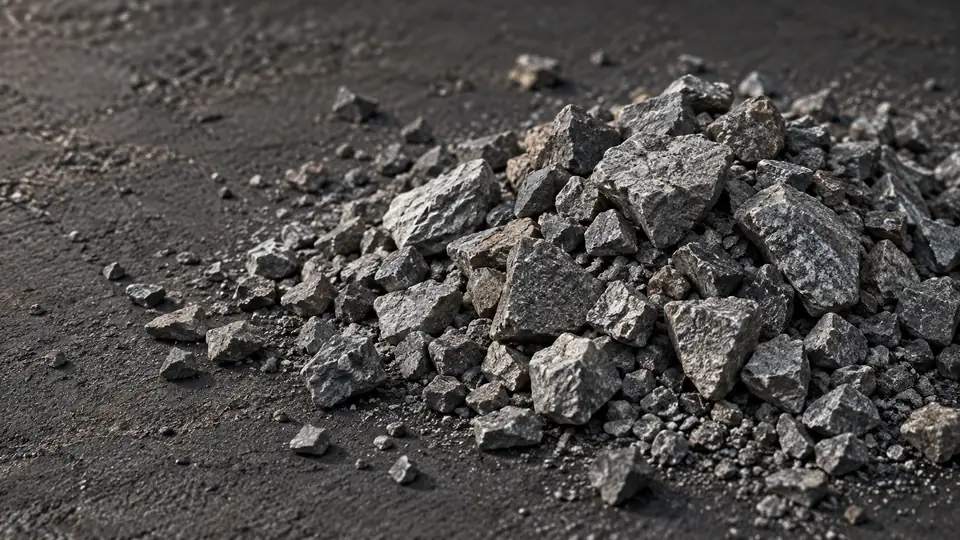
This asphalt calculator guide explains the formulas, measurement steps and cost checks behind that estimate. You will also find clearly labeled examples, a quote comparison checklist and answers to common questions about blacktop and bitumen. All sample densities, layer depths and prices below are illustrative inputs, not a design recommendation or a current local quote.
Calculate asphalt quantity & cost
Measure. Check. Plan.
Measure your project
Record dimensions and separate layers before estimating.
Use the right basis
Check product specifications, units and supplier quote inclusions.
Keep your project record
Save your inputs and estimate with the print control.
On this page
The quick answer: how much asphalt do you need?
For a rectangular area measured in feet, use this formula with thickness in inches and mixture density in pounds per cubic foot:
US short tons = length × width × (finished thickness ÷ 12) × density ÷ 2,000
For multiple layers, calculate each layer separately and add the results. For an irregular driveway, divide the area into shapes you can measure before calculating the layers. A US short ton is 2,000 pounds; it is different from a metric tonne of 1,000 kilograms.
| What you want to estimate | Information you need | Result |
|---|---|---|
| Asphalt mixture quantity | Area, finished layer thickness and applicable mixture density | Weight of each asphalt layer |
| Asphalt material cost | Order quantity and supplier price in the same weight unit | Mix cost before other work |
| Installed driveway budget | Material plus the work actually included or excluded | Scope-specific project estimate |
| Replacement budget | New pavement scope plus removal and disposal arrangements | Replacement estimate with stated assumptions |
Asphalt, blacktop and bitumen: what are you calculating?
Asphalt paving mixture contains aggregate and asphalt binder. The mixture is produced at a plant, placed and compacted on the site; a pavement can contain several asphalt lifts. The binder holds the aggregate together, but it is only one component of the finished mixture.
For homeowner planning, blacktop usually describes the asphalt driveway surface. The word alone does not establish the mix specification, density, thickness or price. Ask the contractor to identify the actual mixture and pavement section rather than assuming every product described as blacktop is the same.
Is a bitumen calculator the same as an asphalt calculator?
People searching for a bitumen calculator may mean the total asphalt mix required for paving. If that is your goal, calculate the weight of the entire mixture. Do not replace the mixture density with the density of binder alone.
If you specifically need binder mass, obtain the binder percentage and its stated basis from the approved mix information. When the percentage is defined by total mixture mass, binder mass equals total mix mass multiplied by that percentage. A percentage expressed relative to aggregate mass requires a different calculation; confirm the basis before using it.
Illustrative binder example: 10 short tons of mixture × 5% binder by total mixture mass = 0.50 short ton of binder within the mix.
That example does not prescribe a binder content or create an additional binder order. It also does not calculate tack coat, sealcoat or chip-seal application rates. Those are separate products and quantities.
Measure the driveway before estimating tonnage
Measure the actual paved footprint, including the apron, turning area and any parking extension. Record the units alongside every measurement. Do not include a landscaped island or a strip that will remain gravel in the paved area.
A rough sketch helps you assign each area to a shape and avoid counting overlaps twice. Use the same boundaries when asking contractors for prices so the estimates refer to the same work.
Rectangles, triangles and tapered sections
| Shape | Area formula | Measurement note |
|---|---|---|
| Rectangle | Length × width | Useful for the main driveway and parking pads |
| Triangle | Base × perpendicular height ÷ 2 | Height must be perpendicular to the chosen base |
| Straight tapered section | Length × (start width + end width) ÷ 2 | Applies when the sides taper evenly |
| Circle | π × radius² | Radius is half the diameter |
| Irregular outline | Sum of measured smaller sections | Subtract overlaps and excluded areas |
For a curved driveway, divide the footprint into smaller measured sections or use a contractor's measured plan. One maximum width multiplied by the full length can overstate the area. Keep the sketch with your estimate so you can revise it when dimensions change.
Use the paving surface area on a slope
The quantity belongs to the surface being paved. On a significant slope, a horizontal map footprint and a measurement along the surface are not identical. Confirm how the survey or contractor calculated the quoted area and how layer thickness is defined.
For preliminary budgeting, record that measurement basis rather than silently mixing the two. Final quantities should follow the project measurements and agreed pavement section. For a separate geometry and volume-unit check, use the cubic yard calculator; return here for the specified asphalt density and tonnage.
Figuring asphalt: the calculation step by step
Figuring asphalt becomes straightforward when the units are consistent. First calculate area, then convert thickness to the same length unit, calculate volume and finally convert that volume to mass. Keep full precision until the final display or ordering decision.
Step 1: calculate area
Area in square feet = length in feet × width in feet
An illustrative driveway measuring 40 feet by 12 feet has an area of 480 square feet. If an additional pad is included, calculate its area separately and add it without double counting the junction.
Step 2: convert finished thickness and calculate volume
Volume in cubic feet = area in square feet × finished thickness in inches ÷ 12
At an illustrative finished thickness of 2 inches, the 480-square-foot driveway contains 80 cubic feet of asphalt mixture. Dividing cubic feet by 27 gives cubic yards, so that volume is approximately 2.963 cubic yards. Volume alone is not tonnage.
Step 3: multiply by the applicable density
Weight in pounds = volume in cubic feet × mixture density in lb/ft³
Using an explicitly assumed density of 145 lb/ft³, 80 cubic feet equals 11,600 pounds. Divide by 2,000 to obtain 5.80 US short tons. This density is a worked-example input; obtain the applicable value for your mix and target compacted condition from the producer or contractor.
Step 4: separate theoretical quantity from order quantity
Planning order quantity = calculated quantity × (1 + allowance percentage ÷ 100)
If the contractor selects a 5% allowance for this example, the planning quantity becomes 6.09 short tons. The 0.29-short-ton difference is an allowance, not another pavement layer or a universal compaction correction. Confirm the actual order and any minimum quantity with the supplier.
The metric formula
Metric tonnes = area in m² × finished thickness in mm ÷ 1,000 × density in kg/m³ ÷ 1,000
An illustrative 100 m² area, 50 mm thickness and assumed density of 2,400 kg/m³ produce 5 m³ and 12 metric tonnes. Do not multiply that result by a price per US short ton. Convert the quantity or obtain a rate per metric tonne first.
Finished thickness, loose thickness and density
Finished thickness describes the pavement after compaction. Asphalt leaving the paver is in a looser condition and consolidates as it is compacted. NAPA's paving handbook treats loose thickness and final specified thickness as different quantities and discusses mixture-dependent rolldown.
For a calculation based on finished pavement volume, use a density consistent with that compacted condition. Applying a loose thickness and a compacted density together can overstate mass. Adding another generic compaction percentage to an already consistent finished-volume calculation can do the same.
What density should you enter?
Request the mixture's applicable unit weight for quantity planning, along with the units and intended condition. A density in lb/ft³ or kg/m³ is not the same input as a compaction target expressed as a percentage. Mixture volumetrics distinguish actual compacted material from theoretical maximum density and laboratory measurements.
Avoid treating a convenient calculator default as a supplier specification. If you are still comparing options, run a labeled sensitivity calculation and replace the assumption when the contractor confirms the mix.
How much difference does thickness make?
For the same area and density, tonnage changes in direct proportion to thickness. Increasing a layer from 2 inches to 3 inches increases its calculated mass by 50%. That does not automatically increase the entire installed price by 50%, because delivery, preparation and equipment charges may follow different pricing rules.
| Illustrative finished thickness | Volume for 480 ft² | Short tons at assumed 145 lb/ft³ |
|---|---|---|
| 1.5 inches | 60 ft³ | 4.35 |
| 2 inches | 80 ft³ | 5.80 |
| 3 inches | 120 ft³ | 8.70 |
| 4 inches | 160 ft³ | 11.60 |
These rows show arithmetic only. Choose the pavement section for the site, loads and mixture, rather than choosing thickness solely to obtain a lower estimate.
Understand the layers under an asphalt driveway
A driveway over a granular base contains different materials with different quantity calculations. The asphalt layers sit above prepared aggregate, and the underlying soil is the subgrade. A full-depth asphalt design uses a different pavement section; an aggregate base is not an automatic requirement for every asphalt design.
| Component | What to record in the estimate | What to keep separate |
|---|---|---|
| Surface asphalt course | Area, finished thickness, mixture and density | Its tonnage and any separate mix price |
| Lower asphalt course, if specified | Its own area, thickness and mixture | Do not count it again as aggregate base |
| Granular base, if specified | Material, compacted section and purchasing basis | Loose delivery volume versus compacted volume |
| Subgrade | Preparation and any specified corrective work | Soil work is not asphalt mixture tonnage |
NAPA's base-preparation guidance emphasizes support, grade and the condition of the underlying soil or granular base before paving. The layer diagram accompanying this article illustrates the arrangement only; its proportions are not construction dimensions.
How thick should a residential asphalt driveway be?
There is no single thickness in this article that applies to every US driveway. The Colorado Asphalt Pavement Association's 2005 residential brief discusses site conditions, loads, drainage and a two-course section over aggregate. Its dimensions are regional guidance in a specific document, not a nationwide requirement for every driveway.
Ask for a written section that identifies each material and its finished thickness. Include vehicles that create unusual loading, such as a regularly parked RV or service truck, when discussing the design. A quantity estimate cannot determine whether the soil and pavement structure will support those loads. For the separately specified aggregate layer, use the 57 stone and gravel types guide to review grading and material roles.
Choose the right scope: new driveway, overlay or replacement
Select the scope before comparing asphalt driveway cost. A quote for adding a surface layer is not directly comparable with a quote for excavation and a completely new pavement section.
| Scope | Quantity calculation | Work to clarify in the quote |
|---|---|---|
| New driveway | Every specified new asphalt layer | Excavation, grading, soil preparation, base and drainage |
| Overlay | Added layers and separate repair areas | Repairs, milling or transitions, cleaning and bonding treatment |
| Replacement | New layers plus separately measured removal | Demolition or milling, hauling, disposal and base repairs |
When an overlay needs more than a new surface
An overlay estimate should identify any failed areas that require repair before paving. The NAPA handbook specifically cautions against covering failed pavement with overlay material and addresses localized replacement and drainage corrections.
Ask how the added elevation will affect the garage entrance, sidewalk, drainage path and street connection. Do not hide repair material inside the overlay thickness; measure patches separately when their depths or mixtures differ. Have the contractor confirm which work is included before treating the surface-only estimate as the project total.
When replacement changes the budget
Published price examples: compare the same product and unit
| Location / source | Listed product | USD / sale unit | Extra charges and limits |
|---|---|---|---|
| Makakilo plant, Oahu, HI · Grace Pacific Effective February 1, 2026 | City & County Mix 4 HMA | $179.60 / ton (supplier-listed basis) | Confirm ton basis, tax, haul, $33.50 scale charge and any plant opening fee |
| Kapaa plant, Oahu, HI · Grace Pacific Effective February 1, 2026 | City & County Mix 4 HMA | $207.60 / ton (supplier-listed basis) | Confirm ton basis, tax, haul, $33.50 scale charge and any plant opening fee |
These are Oahu plant prices effective February 1, 2026, not installed driveway rates. The supplier requires advance scheduling and may assess an opening fee below 250 tons depending on the plant schedule. Confirm the ton definition, mix, scale-charge billing, transport, tax and availability before using a quote. Use the ton standard matching your calculator.
Replacement may involve removing the pavement while retaining a suitable base, or rebuilding the base as well. Those scopes carry different quantities and costs. Obtain the planned removal depth and the method for pricing additional repairs if hidden problems appear.
The new asphalt quantity should follow the new section, not simply repeat the old pavement's estimated weight. Hauling and disposal should follow the contractor's stated measurement and charging basis. Broken material can occupy a different truck volume from an intact pavement layer.
Asphalt driveway cost: build a budget you can explain
A useful asphalt driveway cost calculator must distinguish purchasing the mix from paying for a finished driveway. Start with current written rates from local suppliers or contractors and record what each rate includes. A page labeled with the current year does not by itself establish that its displayed prices match your project.
Material cost = planned order quantity × quoted material rate in the same weight unit
Itemized project budget = material + preparation + base work + delivery + installation + removal and disposal + other stated charges
Only add charges that apply to the chosen scope. Taxes, permits or special site work should appear when applicable and when their amounts are known; an unknown charge should remain visibly unresolved.
Blacktop driveway pricing: per ton, per square foot or a fixed quote?
Blacktop driveway pricing may be presented as a mix price per ton, an installed rate per square foot or one fixed project price. These are different pricing bases. Ask whether a square-foot rate includes the mix, trucking, crew, equipment, base and removal.
| Quoted basis | Calculation | Main comparison check |
|---|---|---|
| Mix per short ton | Order short tons × dollars per short ton | Plant pickup or delivered; mixture and unit confirmed |
| Installed per square foot | Agreed area × installed rate | Finished section and included work written down |
| Fixed project quote | Quoted total plus documented exclusions | Same area, scope, allowances and specifications |
| Extra work per unit | Verified quantity × agreed extra-work rate | Unit and approval process defined before work |
If an installed paving rate already includes mix, crew and equipment, do not add those components again. Add only separately priced exclusions. Keep the rate's scope beside the number so a later estimate revision does not create duplicate charges.
Why a smaller driveway can have a higher cost per square foot
A project can include a fixed mobilization or delivery charge as well as area-based work. Dividing that fixed charge across fewer square feet increases its contribution per square foot. This is a budgeting relationship, not a claim that every contractor uses the same minimum charge.
Ask for the actual minimums and access-related charges rather than scaling down a large-job estimate. Keep a dated copy of each quote and its expiration terms.
Cost to replace an asphalt driveway or blacktop driveway
The cost to replace an asphalt driveway starts with the new paving scope, then adds removal, disposal and the agreed corrective work. Searches for the cost to replace a blacktop driveway refer to the same budgeting task. Use the same scope checklist for either term so removal and base repairs stay visible.
| Replacement item | Question to resolve |
|---|---|
| Existing pavement removal | What area and depth will be removed, and by what method? |
| Hauling and disposal | Are trucking, disposal fees and any recycling arrangements included? |
| Base condition | Is the existing base retained, repaired or replaced? |
| Unknown weak areas | How will additional work be measured, priced and approved? |
| New pavement section | What are the mixtures and finished thicknesses for each layer? |
| Connections and drainage | How will entrances, edges and drainage details be restored? |
A low replacement price can exclude work that another quote includes. Compare written scope first, then compare totals. Do not assume a tonnage calculation has evaluated the condition of the existing base.
Three worked examples: quantity and budget together
Every density, dimension, allowance and rate in the following examples is hypothetical. The examples demonstrate the calculation method, not current US pricing or a recommended pavement design. Actual scope and specifications must come from the project.
Example 1: an overlay order
Assume a 40-by-12-foot driveway receives an illustrative 2-inch finished overlay. The assumed mixture density is 145 lb/ft³, and the selected order allowance is 5%. Repairs or leveling material would require separate quantities if specified.
| Calculation | Illustrative result |
|---|---|
| Area: 40 × 12 | 480 ft² |
| Volume: 480 × 2 ÷ 12 | 80 ft³ |
| Mixture weight: 80 × 145 ÷ 2,000 | 5.80 short tons |
| Planning order: 5.80 × 1.05 | 6.09 short tons |
| Mix at assumed $120 per short ton | $730.80 |
| Separate assumed delivery charge | $250.00 |
| Mix plus delivery subtotal | $980.80 |
The $980.80 subtotal excludes preparation, repairs, bonding treatment and installation. It is not an installed driveway quote. The final order should reflect the contractor's measurements and the producer's ordering arrangements.
Example 2: a new driveway with a separately priced base
Assume the same 480 ft² area has a 2-inch lower asphalt course and a 1.5-inch surface course. For this example only, both use 145 lb/ft³ and a 5% order allowance. The illustrative granular base is 6 inches thick after compaction.
| Quantity | Illustrative result |
|---|---|
| Lower course | 5.80 short tons before allowance |
| Surface course | 4.35 short tons before allowance |
| Combined asphalt | 10.15 short tons before allowance |
| Combined planning order | 10.6575 short tons, displayed as 10.66 |
| Compacted granular-base volume: 480 × 6 ÷ 12 ÷ 27 | 8.89 yd³ |
The 8.89 yd³ describes compacted geometry, not a loose delivery order. This example uses a hypothetical fixed base-work quote, so no unsupported loose-volume multiplier or aggregate density is needed. A real base order would require the supplier's purchasing basis and appropriate material information.
| Budget line | Hypothetical amount |
|---|---|
| Asphalt mix: unrounded 10.6575 × $120 | $1,278.90 |
| Excavation and grading, excluding base work | $900.00 |
| Fixed base quote including material and placement | $1,100.00 |
| Separate asphalt delivery | $350.00 |
| Paving crew and equipment, excluding mix and delivery | $1,800.00 |
| Total of listed work | $5,428.90 |
Use unrounded quantities inside the calculations. The hypothetical total excludes any unlisted taxes, permits, drainage changes or other site work. Its inclusion notes are part of the estimate, not optional fine print.
Example 3: replacement with removal and hauling
Assume a replacement uses all the new-work items in Example 2, with no overlap between those items and demolition. Existing asphalt removal is hypothetically priced at $1.50 per square foot, and hauling and disposal are separately quoted at $450. These assumptions are specific to this example.
| Budget line | Hypothetical amount |
|---|---|
| New-work total from Example 2 | $5,428.90 |
| Existing asphalt removal: 480 × $1.50 | $720.00 |
| Separate hauling and disposal | $450.00 |
| Replacement total of listed work | $6,598.90 |
| Total divided by 480 ft² | $13.75/ft², rounded |
If the demolition rate includes hauling, omit the separate hauling charge. If the retained base needs less work than a new driveway, revise the new-work lines rather than automatically carrying them across. If it needs additional repair, add that work with its agreed quantity and rate.
Compare contractor quotes on the same basis
Put the measured area and proposed pavement section at the top of your comparison. Then identify included work, exclusions and unresolved items before ranking the quotes by price. The Colorado driveway brief recommends written quotes with dimensions, material types, thicknesses and project details.
| Comparison field | Quote A | Quote B |
|---|---|---|
| Measured paved area | Record area and basis | Record area and basis |
| Scope | New, overlay or replacement | New, overlay or replacement |
| Each asphalt course | Mix and finished thickness | Mix and finished thickness |
| Preparation and base | Included work and dimensions | Included work and dimensions |
| Removal and disposal | Included or separately priced | Included or separately priced |
| Delivery and mobilization | Inclusion and minimums | Inclusion and minimums |
| Additional repairs | Agreed rates and authorization | Agreed rates and authorization |
| Taxes and permits | Included, excluded or unresolved | Included, excluded or unresolved |
| Schedule and written warranty | Terms provided | Terms provided |
This blank comparison is intentionally not a list of market prices. It gives you a way to transfer actual proposals into matching fields. An unresolved item is a reason to clarify the quote, not enter zero automatically.
Questions to ask before approving the job
- Are the stated asphalt thicknesses measured after compaction?
- Which mixture is specified for each course?
- How were the paved area and any repair areas measured?
- What base and drainage work is included?
- Are delivery, mobilization, removal and disposal included in the total?
- What happens if excavation exposes unsuitable material?
- Who approves extra work, and which rates apply?
- What are the payment, schedule, warranty and opening-to-traffic terms?
Check the contractor before comparing the price
Ask for the business name used on the written quote, the work it will perform and the area it serves. A quote website or directory listing is a starting point; check credentials with the relevant authority and confirm the job directly.
- Identity and credentials: match the quote business to the license or registration record where required. California provides a CSLB license lookup; Washington provides an L&I contractor verification tool. These examples apply to their respective states.
- Service area: confirm your project address is covered and ask about travel, minimum-job and mobilization charges. A city in a listing does not establish a delivery radius.
- Work specification: record material, finished thickness, base preparation, drainage, removal, disposal and who obtains any required approvals.
- Accountability: request insurance information, relevant project references, written payment stages, change-order terms, workmanship terms and a named contact for defects.
- Quote scope: distinguish material supply, delivery, spreading, compaction and a complete installed job. Keep a dated copy and confirm its validity before accepting.
For a bulk order, compare seller terms in the gravel delivery guide. For a recurring failure, use the gravel driveway repair guide to describe the problem before requesting a repair quote.
Make an asphalt quote measurable
Record mix designation, plant, density basis, compacted lift thicknesses, prepared footprint, base work and haul/placement plan. A recycled-millings yard price is not a hot-mix asphalt ton price or an installed asphalt quote. Specify removal, grading, traffic/access arrangements, equipment mobilization and any minimum-job charge.
Keep compacted design volume and compacted density together. Add a separately chosen procurement allowance only for the stated reason; applying another blanket compaction percentage can count the same adjustment twice. Compare actual installed options with the quote worksheet on this page, then use the maintenance worksheet beside the calculator.
Check the estimate against the completed work
Ask which quantity records the contractor can provide. NAPA describes load tickets as records of delivered mixture type and quantity, with other load information. Keep those records with the agreed area, layer specifications and any approved changes.
Delivered tonnage alone does not prove the finished thickness or construction quality everywhere. It can include mix used in repairs or other areas, and the estimate can change when the measured scope changes. Resolve those differences using the project records rather than assuming every discrepancy is waste or underdelivery.
Common estimating mistakes to avoid
| Mistake | Better approach |
|---|---|
| Treating square feet as tons | Include thickness and mixture density |
| Entering inches as feet | Divide inch thickness by 12 in the US formula |
| Confusing a short ton with a tonne | Match the mass unit to the supplier's price |
| Counting existing pavement in an overlay order | Calculate only new layers and separate repair quantities |
| Mixing loose thickness with compacted density | Use a consistent physical basis |
| Treating stone base as asphalt | Keep materials and layers separate |
| Adding mix and labor to an inclusive installed rate | Add only documented exclusions |
| Using the old section as the replacement design | Calculate the specified new section |
| Turning unknown site work into a $0 line | Mark it unresolved until the scope or rate is known |
Related driveway planning
Use the Gravel Driveway Calculator guide when the scope includes a separate granular driveway or base-material estimate. Use the Tar and Chip guide for that surfacing process rather than treating it as a hot-mix asphalt layer. For a concrete alternative, compare the Concrete Cost guide using the same area and a clearly defined construction scope.
Before requesting a price, keep your measurements, proposed layers and scope checklist together. Give each contractor the same information, then update the estimate with the work and rates in the written proposals.
Calculation and scope notes
Frequently asked questions
How many tons of asphalt do I need for my driveway?
Multiply the measured area by finished thickness and applicable mixture density, then convert the weight to the supplier's mass unit. Add separately calculated layers and repairs. Any order allowance should remain visible and be agreed for the job.
How much does one ton of asphalt cover?
Coverage changes with thickness and density. In US units, square feet per short ton equals 2,000 ÷ [density × (thickness in inches ÷ 12)]. At the illustrative 145 lb/ft³ and 2-inch thickness, the result is approximately 82.76 ft² per short ton before allowance.
Are asphalt and blacktop the same for driveway estimating?
The estimating method depends on the actual paving mixture, not the informal name. Ask for the mixture specification, density and finished section. Do not infer a lower price or different required thickness from the word blacktop alone.
Does a bitumen calculator estimate the whole paving mixture?
It may, depending on what the user means by bitumen. This guide calculates the whole asphalt mixture for driveway planning. Binder-only calculations require the correct binder content and percentage basis and should not be confused with the mix order.
Can I estimate cost using only square footage?
You can multiply area by a genuine installed square-foot rate if the quoted scope and section are defined. Area alone cannot calculate mix tonnage. It also cannot reveal exclusions in a lump-sum or installed quote.
Is resurfacing the same as replacing an asphalt driveway?
An overlay adds material over retained pavement after the specified preparation. Replacement removes some or all of the existing pavement before the new work. Ask what the contractor means by resurfacing and write down the removal and repair scope.
Should I add a fixed waste percentage?
Use an allowance only when its reason and amount are appropriate to the job. Keep it separate from the theoretical layer quantity. Confirm ordering increments and any minimum with the producer; extra material is not a remedy for incorrect measurements.
Does sealcoating add another asphalt pavement layer?
Do not count sealcoating as a structural asphalt layer in this tonnage formula. Specify it separately if it is part of the work. Application timing and coverage should follow the selected product and contractor instructions.
Can I use this formula for a bagged pothole repair product?
The geometric volume can help describe the repair, but buy the product using its manufacturer's stated coverage and application instructions. Do not assume the example hot-mix density applies to every packaged repair material. Keep patch depth and any multiple applications consistent with that product's requirements.
Does the estimate tell me how many trucks to order?
Not by itself. Truck capacity, legal loading limits, access, dispatch and placement scheduling need confirmation with the supplier and paving contractor. Do not divide by an assumed universal truck size and treat the result as an order schedule.
Understand the estimate and its assumptions
Read the formulas and worked examples on this page alongside the entered values. Geometry estimates space; density converts volume to mass; product yield converts a quantity to packages. An allowance and supplier purchase rounding are separate adjustments.
Use the same material condition and units as the supplier specification. Enter a local quoted price when pricing work. Missing fees remain unresolved, and a material subtotal does not establish an installed project price. Example values illustrate arithmetic and are not local quotes or construction specifications.
Keep the printed input record with your estimate so a supplier or contractor can check the values that produced it.