
Landscape Fabric Under Gravel: A Practical Guide for Paths, Patios and Rock Beds
Weeds pushing through a gravel path are frustrating, but the bigger mistake is burying the wrong barrier beneath stone you will later have to move. A rock bed that looks easy to maintain today may become difficult to weed, replant or repair once fabric, roots and debris become tangled together.
Landscape fabric under gravel can be useful when the project needs a defined boundary between soil and stone. The right decision depends on what the area is for, how water will move through it, and whether you expect to dig or change the planting later.
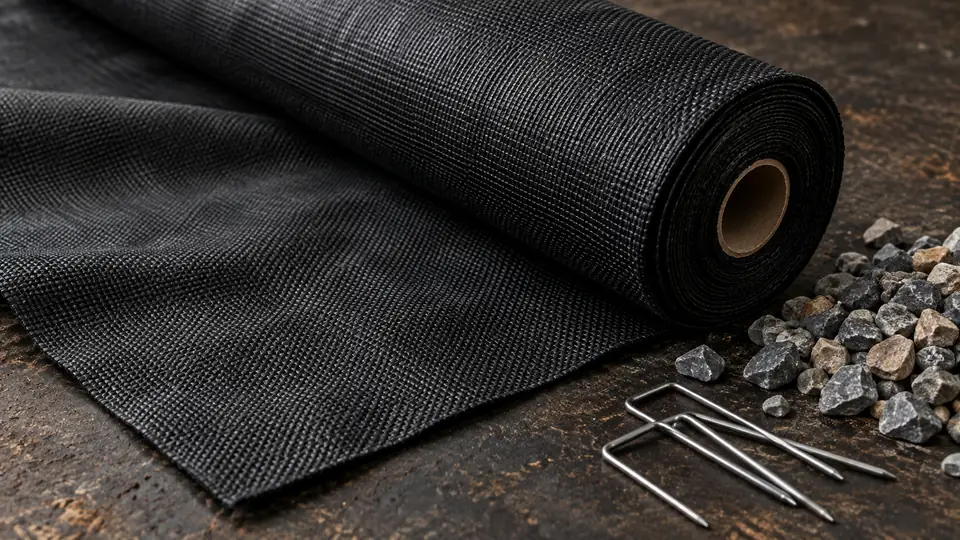
This guide helps you decide whether to use fabric, compare it with other approaches, prepare a decorative gravel project and plan its upkeep. It covers walking paths, gravel patios, pea gravel and river-rock beds; vehicle-loaded driveways require a different assessment.
On this page
Should you use landscape fabric under gravel?
Consider it for a stable, mostly unplanted gravel area where separation is useful; reconsider it where frequent planting or digging is part of the plan. Fabric is one component of a landscape, rather than a guarantee of permanent weed control. Start by identifying the problem you want it to solve.
A useful question is: “Would I still want this layer if some weeds appeared above it?” If the answer is yes because it preserves a boundary between stone and soil, investigate a suitable product. If the entire justification is never weeding again, revise the plan before buying.
| Project | Decision to investigate | Check before choosing |
|---|---|---|
| Unplanted gravel path | Consider a permeable separator in the proposed assembly. | Ground condition, edging, walking comfort and future access. |
| Gravel patio | Decide on the surface and base first, then the underlay. | Furniture support, drainage, intended traffic and maintenance. |
| Decorative rock strip | Consider fabric if the layout will remain stable. | Leaf accumulation, soil washing in and access to nearby services. |
| Frequently replanted rock bed | Compare a fabric-free design before committing. | Plant division, soil improvement and stone removal during digging. |
| Driveway or parking area | Assess the vehicle-loaded assembly separately. | Soil, traffic, drainage and specified geotextile properties. |
These are planning prompts, not an engineered layer specification. For the final row, use the driveway fabric guide rather than treating a garden weed barrier as a substitute for a designed driveway system.
Measure. Check. Plan.
Measure your project
Record dimensions and separate layers before estimating.
Use the right basis
Check product specifications, units and supplier quote inclusions.
Keep your project record
Save your inputs and estimate with the print control.
Separation and weed suppression are different jobs
A boundary between soil and stone
When shopping for fabric under gravel, write down its intended position and function. Is it separating a decorative stone layer from soil, or does the proposed project require a geotextile selected for a more demanding application? A product advertised for garden weed suppression does not establish the requirements of every possible gravel assembly.
Do not confuse a sheet underneath the gravel with edging around it. The boundary below and the restraint at the perimeter serve different purposes; loose gravel can still escape at an open edge. Draw both into your project plan.
Reducing weeds from below
Illinois Extension explains the limitation of landscape fabric: an initial barrier does not stop seeds establishing in material that collects above it. Its discussion also cautions that permeability varies and can deteriorate as openings become clogged.
Separate your maintenance questions accordingly: what is coming from the soil below, what is growing in accumulated debris above, and what is entering from the perimeter? Those situations call for different actions, even when they all look like “weeds in gravel.”
Choose by the way you will use the space
Landscape fabric for a gravel path
For a path, first identify who will use it and what they will carry or push. A rarely used garden route and a daily entrance route may deserve different surfaces. The best weed barrier for a gravel path cannot make an unsuitable walking surface comfortable.
The U.S. Access Board’s surface guidance requires firm, stable and slip-resistant surfaces where the standards apply, and notes the limitations of loose gravel. Fabric beneath stone does not itself establish accessibility; assess the complete surface and the requirements that apply to the route.
Landscape fabric for a gravel patio
Choose the patio surface before selecting the fabric. Think about chair legs, table stability, barefoot use, routes to the house and the effort of keeping stone in place. Use the pea gravel patio planner to work through those design choices, then return here for the underlay decision.
Do not add a barrier simply because a roll is on sale. Ask whether the selected patio assembly needs it, where it belongs and whether the product instructions support that use.
Rock beds, rock gardens and decorative strips
Divide a planted area into zones instead of assuming that every square foot needs the same treatment. A permanent unplanted strip and a bed of perennials you regularly divide have different access needs. Consider whether a simpler layout, a different groundcover or fewer loose stones around plants would make maintenance easier.
A rock garden is also a planting environment, not merely a decorative stone surface. Account for the chosen plants and their soil needs before deciding what to put under landscape rock.
When future planting makes fabric less appealing
For a planted bed using organic mulch, the mulch calculator estimates each bed and compares bagged and bulk orders separately. It does not assume that a gravel-underlay detail applies to a planted bed.
Before covering the ground, imagine the next change: replacing a shrub, dividing a clump, improving the soil or moving an irrigation line. Every change requires access through both the stone and the barrier. Mark expected digging areas on the plan and compare that workload with the benefit you expect from separation.
Washington State University’s landscape-fabric bulletin describes roots colonizing fabric and the potential for root damage during removal. That is a reason to consider reversibility in planted ornamental beds, rather than assuming the barrier will stay convenient indefinitely.
Questions for a planted rock bed
- Will you divide or replace these plants regularly?
- How will you add or amend soil without mixing it into the stone?
- Can irrigation fittings be accessed without opening the entire bed?
- Where will displaced stone be stored during work?
- Would an organic mulch or a different planting layout better suit the maintenance plan?
For established trees or valuable shrubs, avoid casually cutting roots to make a neat fabric layout. Resolve the planting and excavation plan with an appropriate local horticultural professional before proceeding.
Plastic or landscape fabric under rock—and other options
Permeable fabric versus impermeable plastic
Do not substitute ordinary impermeable plastic sheeting for a specified permeable landscape product. They create different water pathways. A sheet intended to block water needs a drainage design; poking improvised holes does not make it equivalent to a tested geotextile.
Use the actual manufacturer’s information to establish the product’s construction and intended applications. For example, TYPAR identifies its landscape fabric as porous, nonwoven spun-bonded polypropylene and lists use under mulch and rock. This is a product example, not a claim that every nonwoven fabric is suitable for every site.
Leaving out fabric
A fabric-free design may be worth considering where repeated digging and soil improvement are priorities. It still needs a deliberate approach to weeds, stone placement and maintenance. Compare the work over the life of the garden, rather than comparing only the installation day.
Cardboard, organic mulch and a different surface
Cardboard is a temporary, degradable material, so do not treat it as a durable separation product beneath a permanent stone project. Organic mulch belongs in the comparison where planting access matters, but it creates a different finish from decorative gravel. Choose the landscape you want to maintain before choosing the underlayment.
If loose gravel does not suit the route or seating area, reconsider the surface rather than adding layers underneath in the hope of changing its behavior. For a paver option, the paver base calculator can estimate quantities after you establish the required assembly; it does not decide which layers your site needs.
What is the best landscape fabric for under gravel?
The best landscape fabric for gravel is the product that fits the selected job and comes with information you can verify. “Heavy duty,” a fabric weight and a long warranty are not enough on their own. Request the exact product name and current instructions before comparing prices.
| Selection check | What to ask | Why it matters |
|---|---|---|
| Intended application | Is this exact product intended for the proposed stone-covered use? | A broad brand description may refer to several different products. |
| Water movement | What permeability information is available, and does it fit the site? | A porous sheet cannot solve an unsuitable outlet or receiving ground. |
| Handling and covering | What precautions apply to cutting, anchoring and spreading stone? | The product needs to survive installation as well as service. |
| Roll layout | Can the shape be covered with practical seams and manageable cuts? | Nominal roll area is different from usable coverage on your plan. |
| Exposure and warranty | Must it stay covered, and what does the warranty actually include? | A marketing lifespan is not a promise to pay for removing and replacing stone. |
| Maintenance access | How will this layout accommodate future planting or repairs? | A cheap installation can become an inconvenient barrier later. |
Woven versus nonwoven: avoid a blanket rule
Do not rank all woven products above all nonwoven products, or the reverse, from appearance alone. Evaluate the exact product, intended use and documented properties. If the supplier recommends a substitution, ask what application evidence supports that change.
Best-product searches without invented rankings
Queries such as “best landscape fabric for pea gravel,” “best landscape fabric for river rock” and “best weed fabric for rocks” lead to the same comparison task: establish the project requirements, then evaluate real products. This guide does not claim to have tested or ranked rolls. Use the checklist to eliminate options whose suitability remains unclear.
How to lay landscape fabric under gravel
1. Confirm the layout and water route
Mark the perimeter, planting openings, service access and where water is intended to go. Investigate recurring ponding, runoff carrying soil into the area, or persistently soft ground before concealing the problem. For planned digging, arrange the utility-location process appropriate to the property and confirm how private lines will be identified.
2. Prepare before unrolling
Use the selected product’s preparation instructions and address existing vegetation before covering. DeWitt’s installation guide describes clearing weeds, preparing the surface, overlapping fabric, securing it and covering it. Its pathway detail specifies at least 6–8 inches of overlap; treat that as a named manufacturer example, not a universal dimension for every roll or ground condition.
3. Dry-fit seams and openings
Place the pieces before permanently fixing them. Check that seams meet the chosen instructions and that intended openings are easy to identify. Allow for the actual layout rather than ordering exactly the visible ground area and hoping every offcut will be usable.
4. Secure and inspect
Follow the product’s anchoring detail, giving particular attention to seams and edges. Check for displaced pieces, tears and unplanned openings before hiding the layer. Do not invent a universal pin spacing or use pins as a substitute for resolving an unsuitable surface.
5. Cover using a controlled sequence
Follow the product’s covering and handling requirements. Plan how the stone will be delivered and spread without damaging the exposed material. Photograph the arrangement before covering, including seams, planting openings and service locations.
6. Finish the perimeter and document the job
Check that edges, access points and transitions match the design, then retain the label and instructions. Write down the stone product, selected depth and any installation details needed for future repair. There is no single gravel depth in this guide because the surface, stone size and assembly must be established for the actual project.
Plan the seams and later access
Leave a documented route to irrigation and plant openings. If a plant will grow through the layer, agree how the opening can expand without constriction and how future replacement will avoid burying torn fabric. Mark which areas can be lifted for repairs. Weeds growing in accumulated debris above the fabric still need maintenance.
Use the roll worksheet only for uninterrupted rectangular strips. Add openings, turned edges, stakes, edging, gravel and future removal separately. For vehicle traffic, use driveway fabric guidance and the specified separation system.
Pea gravel and river rock: two practical planning examples
A pea-gravel path with few plants
Suppose you want a narrow decorative path between two planted areas. Start with walking suitability and perimeter restraint; then consider whether separation fits the proposed layer arrangement. Include access for nearby irrigation before the path is covered.
Once the area and depth are decided, use the pea gravel calculator for the quantity estimate. Keep the fabric purchase separate: overlaps, roll dimensions and cuts affect its coverage differently from the volume of stone.
A river-rock bed beneath a leafy tree
Suppose a decorative bed receives heavy leaf fall and contains shrubs you expect to replace. Compare the time needed to clear debris and move stone for planting with the benefit of keeping the stone separated from soil. A stable unplanted strip may justify a different choice from the frequently replanted portion.
What to put under river rock landscaping is therefore a design question before it is a shopping question. Do not assume that buying the thickest weed barrier removes the need to clean the surface or makes future planting easier.
Drainage, irrigation and access deserve their own check
Trace water through the entire project: where it enters, where it travels and where it can leave. A permeable fabric is not a drainage outlet. If water crosses the area from another surface, solve the routing problem before choosing an underlay.
Keep decorative beds distinct from drainage systems
A river-rock feature that handles runoff or covers a drain needs assessment as a drainage project. Do not select a filtration layer simply from this decorative-landscape guide. Confirm the design, soil compatibility and required material with the responsible designer or installer.
Plan repairs before hiding connections
Mark irrigation controls, cleanouts, covers and connections that must remain accessible. Ask the installer to show how they can be reached without dismantling an unnecessarily large area. Keep photographs with the product records so a later repair starts with useful information.
Why weeds still appear—and how to diagnose the problem
Check where the weed is rooted before deciding that the whole fabric layer has failed. A shallow weed in debris above the stone, a plant at a seam and growth around a planting opening are different observations. Clear a small area carefully enough to understand the location without tearing the barrier.
| What you observe | What to investigate | Useful next action |
|---|---|---|
| Weeds across the top | Accumulated leaves, soil or other debris. | Inspect the rooting location and revise surface-cleaning routines. |
| Growth along one line | A seam, edge or service opening. | Expose a small section and check the installed detail. |
| Visible fabric | Stone displacement, an edge defect or installation damage. | Find the cause before simply adding more stone. |
| Ponding after rain | The complete water route and receiving ground. | Assess drainage before assuming a new fabric will solve it. |
| Roots tangled with the layer | The condition of planting and the feasibility of removal. | Plan a staged repair and seek help where valuable roots are involved. |
A maintenance routine you can actually keep
Inspect after installation and after conditions that noticeably move debris or stone. Clear accumulated material, check edges and address small problems before they are hidden by a new top-up. Set the interval to your site’s leaf fall, runoff and use rather than copying an arbitrary calendar.
Avoid aggressive raking that catches an exposed sheet. Follow any product restrictions, and keep weed treatment consistent with the plants and surface involved. Chemical treatment, if considered, requires the applicable product label; this guide does not prescribe a universal herbicide.
Repair, removal and the real cost of the decision
Published price examples: compare the same product and unit
| Location / source | Listed product | USD / sale unit | Extra charges and limits |
|---|---|---|---|
| US online listing; local store not selected · Home Depot Effective date not stated; confirm selected-store price | GARDIEN LF40645 4 × 100 ft fabric + 36 staples | $65.99 / roll package | Local store/stock may vary; tax and shipping not established; not a driveway structural specification |
The retailer displays $65.99 for this exact package: $0.165 per gross square foot before overlaps, cuts, tax and shipping. Local store prices and availability may differ. Use the fabric worksheet above for whole rolls; suitability under gravel and any required overlaps must come from the selected product’s instructions. This landscape product price does not establish driveway geotextile performance.
Before replacing an entire layer, determine whether the problem is local damage, contaminated stone, an unsuitable layout or a drainage issue. Replacing fabric alone may repeat the same result. A repair should address the reason the area became difficult to maintain.
Compare a complete scope, not just the roll price
- Exact fabric product and coverage after seams and cuts.
- Preparation, vegetation management and any required excavation.
- Edging, stone supply, delivery and spreading.
- Planting or irrigation access and associated repair work.
- Removal, sorting or disposal of existing materials.
- Labor, taxes and any project-specific equipment or access charges.
Ask for a written quote that identifies included work and exclusions. There is no national price estimate here: actual U.S. supplier and contractor costs need a location, project scope and dated evidence. A product warranty should also be checked separately from the installer’s workmanship agreement.
Leave a useful record
Save photographs, receipts, product instructions and the agreed layer arrangement together. Note what must be moved to access services or replace plants. The goal is a maintainable landscape whose next owner or contractor can understand.
Before you cover the fabric: final checklist
- The intended function of the fabric is written down.
- The surface suits its users and planned activity.
- The ground condition and water route have been assessed.
- The exact product’s suitability and instructions are available.
- Preparation, seams, anchoring and handling follow those instructions.
- Planting openings and service access match the layout.
- The perimeter is planned independently of the sheet below.
- The stone material and depth come from the chosen project assembly.
- You can keep the surface clear and reach future repair areas.
- Product details and photographs are saved before covering.
Common questions about fabric under gravel and rock
Do you need landscape fabric under gravel?
Not automatically. Establish whether separation is needed, what the proposed assembly requires and whether future digging makes the layer inconvenient. A promise of permanent weed prevention is not sufficient justification.
What should I put under landscape rock?
Choose according to the area’s function, water movement and planting plan. A stable decorative strip, planted rock garden and runoff-carrying feature can require different designs. Do not turn a generic underlayment recommendation into a drainage or structural specification.
What should I put under river rock to prevent weeds?
Compare a suitable barrier with a maintenance-focused fabric-free design, depending on the project. Neither removes the need to manage material accumulating above the stones. Plan access to plants and services before committing to a permanent layout.
Is landscape cloth different from landscape fabric?
Retail descriptions use “cloth,” “fabric” and “weed barrier” inconsistently. Compare the exact product identity, construction, intended application and instructions rather than assuming the name tells you its suitability.
What is the best underlayment for landscaping rocks?
There is no single best underlayment for every rock bed. Evaluate documented suitability, water movement, installation requirements and maintenance access. Brand or fabric weight alone does not answer those questions.
Can I put landscape fabric over existing weeds?
Prepare the area according to the selected instructions and address existing vegetation before covering. Fabric should not be used to avoid investigating persistent growth or an unsuitable ground condition.
How long will landscape fabric last under stone?
Do not rely on a universal lifespan. Check the exact product warranty, exposure and installation requirements, and distinguish product replacement from the labor of moving stone. Inspect the installed area as conditions change.
Should I add another layer over old landscape fabric?
First investigate why the existing installation is failing or becoming inconvenient. Adding another hidden layer complicates later work and does not establish that the underlying problem has been addressed. Compare a local repair, removal or redesign before adding material.